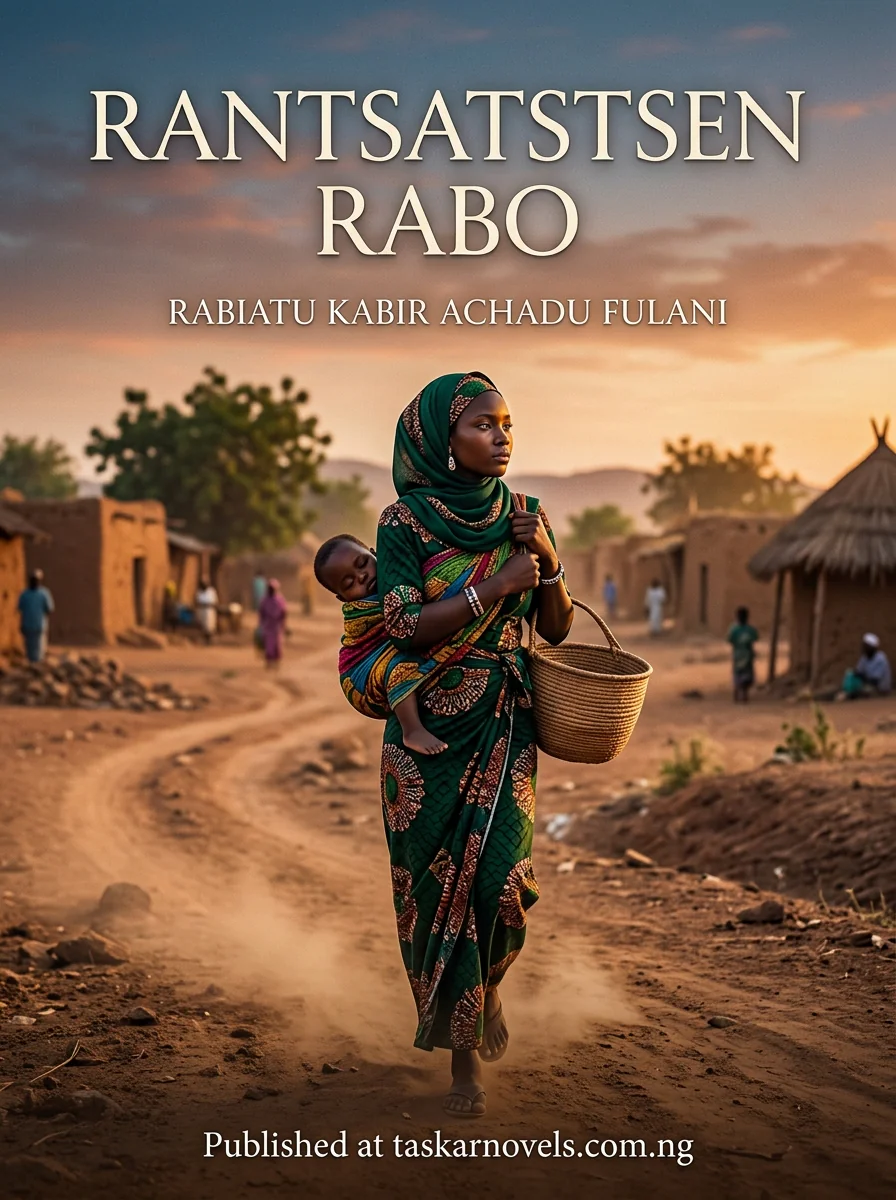

You know that feeling when you're waiting for someone you really, really love, and you've put your whole heart into getting ready for them? That's Shafa. Every time her phone buzzes, her heart jumps a little. She just wants it to be him, Farid, her husband, finally coming home after months away. She’s been through this so many times, she should be used to it, but a part of her always hopes this time will be different. She even saves his number as "Honey," a little wish for things to be sweet between them again. She calls him, and when he picks up, she can't help but pour out her worry, her voice shaking. "Honey Allah Ya sa dai wannan lokacin ba wasa kake da zuciyata ba, don Allah ka faɗa mini gaskiya." (Honey, may God make it so you're not playing with my heart this time, please tell me the truth.)
Farid, bless his soul, he says all the right things. He promises her, "Zancen gaskiya kenan ke dai ki shiryawa zuwata a wannan karon ba zan ba ki kunya ba." (That's the truth, just get ready for my arrival this time, I won't let you down.) And then, just like that, he hangs up. Shafa looks at her phone, a mix of hope and weariness washing over her. It's been five long months since he left for "ƙasar kudu," the southern country, and in all that time, he's barely looked back. It's a cycle, really: he promises to come, she waits, he disappears, and then days later, he calls with some excuse about work holding him up. But still, she clings to that hope.
So, Shafa gets to work. She cleans everything, every corner of the house, until it sparkles. She feels this burst of happiness, knowing her husband is supposedly coming home. You see, it hasn't been easy for her. All these months alone, sometimes she needs special pills just to get some sleep. The loneliness is a heavy blanket, and she just yearns for his presence. She spends the whole day pampering herself, getting all done up, putting on clothes that she knows will make her look amazing for him. She wants to be perfect, to make him happy, to make him stay. She wants to rekindle the fire that seems to have died down.
But as the hours tick by, the house remains empty. No Farid. No sign of him. She tries calling him, again and again, but the phone just rings and rings. By eleven at night, she's sitting by her mirror, looking at herself in the tight, revealing dress, all dressed up with nowhere to go. Then, her phone buzzes. Her hands actually tremble as she opens the message. It's from Farid. "Ki yi haƙuri Shafa, uzuri mai ƙarfi ne ya ta so sai wani lokaci." (Sorry Shafa, a strong reason came up, maybe another time.) Just like that, her world crumbles. She slides off the bed, onto the floor, and just breaks down. The crying comes from deep inside, a raw, painful sound that tells of all her buried sadness and frustration. She can't hold it in anymore.
Fifteen years of marriage, and it feels like nothing. "Aure shekara goma sha biyar amma ba ka zauna da miji na cikakken sati uku mai kyau ba? Wane irin masifa Farid yake son jefani a ciki? Bai san ina buƙatar shi bane? Bai san ina son kasancewa cikin jikin shi bane? Gaskiya ba zan iya cigaba da zaman nan ba." (Fifteen years of marriage, but you haven't spent even three full good weeks with me? What kind of trouble is Farid trying to throw me into? Doesn't he know I need him? Doesn't he know I want to be in his body? Honestly, I can't continue this marriage.) Her words spill out, a mix of anger and pure heartbreak. It's not just about physical intimacy; it's about being seen, being wanted, being a wife in a real marriage. After a good, long cry, she eventually finds herself doing her prayers and then finally, sleep takes over.
Her friends, they get it, mostly. Or at least, they try to. One friend, maybe Hadiza or Wasila, tells her straight up, "Ki zauna ki kashe kanki saboda ɗa namiji shi yana can yana cinye-ciyen mata ke kina nan kina ƙunci tare da kwanan takura." (You're going to kill yourself over a man who's out there sleeping with other women while you're here suffering and sleeping alone.) They tell her she needs to find a solution for herself, someone to "rage miki ruwan mara" (ease her sexual frustration). Shafa's heart sinks. How can she? She has children, Anisa and Lawal. "Su Anisa na yi yaya da su? Gaskiya bana tunanin zan iya mu'amala da wani, ina da yara fa a gida." (What about Anisa? Honestly, I don't think I can interact with someone else, I have children at home.) The guilt, the shame, it’s all too much.
But her friends are relentless. They say, "Don't bring anyone home, you go out!" They even suggest that since Anisa is about to start her national service, maybe she should go to Kaduna instead of staying in Abuja. That way, her son Lawal won't know when Shafa slips out. It sounds so simple, yet so wrong to Shafa. She worries so much about her children finding out. You can feel her struggle, caught between her deep-seated values and her desperate need for connection. This book, *Kwanan Gida* by Aisha JB, really pulls you into Shafa's world, making you feel her pain and her impossible choices. It’s a powerful story about what happens when a woman’s needs are ignored for too long.
Life at home is a constant reminder of Farid’s absence. Anisa often complains about "Abba" (her father), saying he's always working and never has time for them. Shafa sees her daughter growing up, asking questions. One time, Anisa comes out in a nightgown, and Shafa has to gently remind her, "Anisa wai ba na hanaki fitowa da rigar barci nan ba?" (Anisa, didn't I forbid you from coming out in a nightgown?) Anisa just brushes it off, saying it's just them and Lawal in the house. Shafa, ever the patient mother, doesn't push it too hard. Then there's Lawal, her son, who's always asking for a maid. His sister warns him that their mother knows about his "tsiyar da kake tafka musu" (the mischief he gets up to) but just ignores it. It seems like everyone in the family is dealing with their own secrets and frustrations, all tied to the void left by Farid.
Her friends, Hadiza and Wasila, they offer up all sorts of wild suggestions. Hadiza even suggests Shafa should try being with a woman, saying it could be more pleasurable and discreet. Shafa is just stunned, "Mace fa? To in yi me da ita?" (A woman? So what would I do with her?) It’s so far from anything she's ever imagined. Hadiza, who seems to be quite experienced in such matters, tries to convince her, but Wasila jumps in, talking about how a "lafiyayyen namiji mai miƙaƙƙiyar bura" (a healthy man with a firm penis) is what truly hits the spot, reaching all the "lungu da saƙo na ƙarshen loƙon daɗin ka" (innermost corners of pleasure). Shafa just listens, head in her hands, watching her friends, amazed by their openness and boldness, feeling like she's the only one holding back, "ƙunshe da duri wuri ɗaya" (holding her sexuality in one place).
The friends keep telling her that her children aren't her biological kids, but Farid's from his first marriage, and their mother left because she couldn't handle him either. They remind her that Farid hasn't given Shafa her due, and time is flying by. It's a tough pill to swallow, hearing them talk like that. Shafa still feels so much guilt. She can't imagine letting "sheɗan" (Satan) win. But the pressure is real. When they meet up, sometimes a young man even joins Wasila, calling her "Maamah" and kissing her right there. Shafa can’t stand it; she just grabs her bag and leaves. It’s too much for her to watch.
Even walking home, the neighborhood gossips. People talk about "Alhaji Farid ya ajiye mata a gida sai ya yi wata da watanni bai kewayo inda take ba shi ba ya tunanin lalacewar zamani" (Alhaji Farid has left his wife at home for months without coming to her, doesn't he think about the decay of the times?). They wonder if Shafa, with her businesses and money, might be "yar kwana tana zuwa juye bakin mai" (going out to sleep around). The weight of societal judgment, her own desires, her children, and her absent husband — it's all piling up on Shafa. You just can't help but wonder what she's going to do. Will she give in to her friends' advice, or will she find another way to cope with her lonely marriage? This novel explores the raw, often unspoken desires and challenges faced by women in such situations. It's really one of the best Hausa novels I’ve read in a long time.
If you love stories that dive deep into emotions, family drama, and real-life struggles, you absolutely have to read *Kwanan Gida*. It's not just a story; it's an experience that makes you think and feel. You can find this amazing book and download Hausa novels just like it on Taskar Novels. They have so many Hausa novels online, you'll definitely find something you love. Don't miss out on Shafa's journey!